
Video Review:
Written Review:
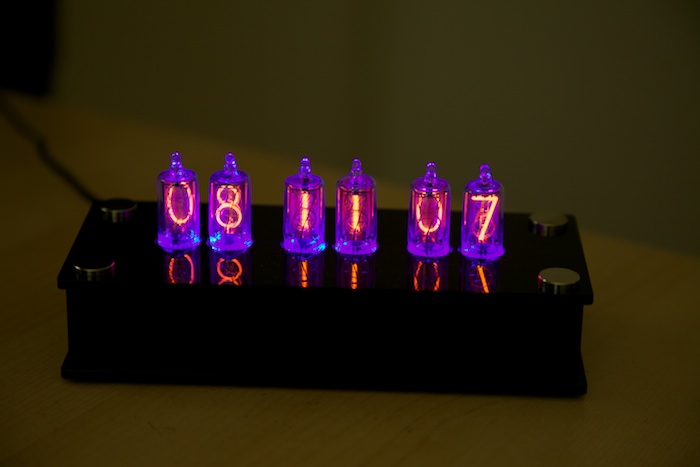
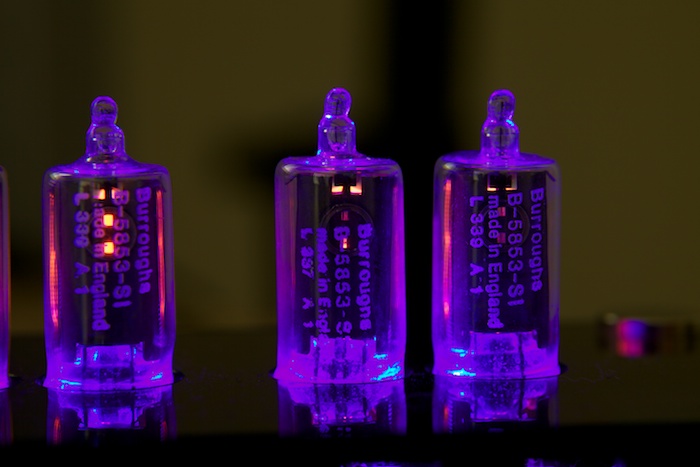
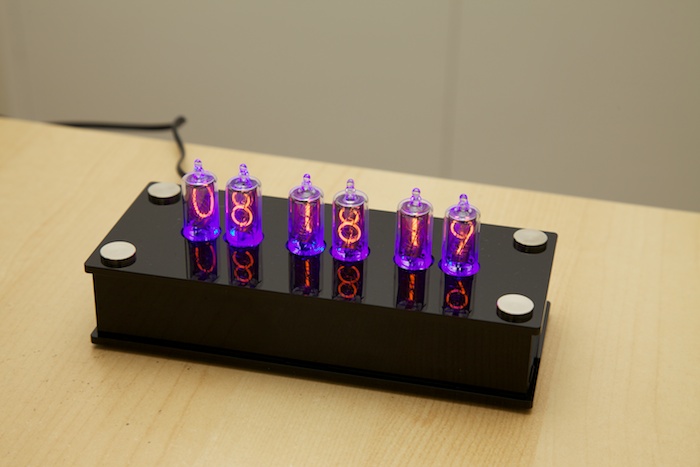
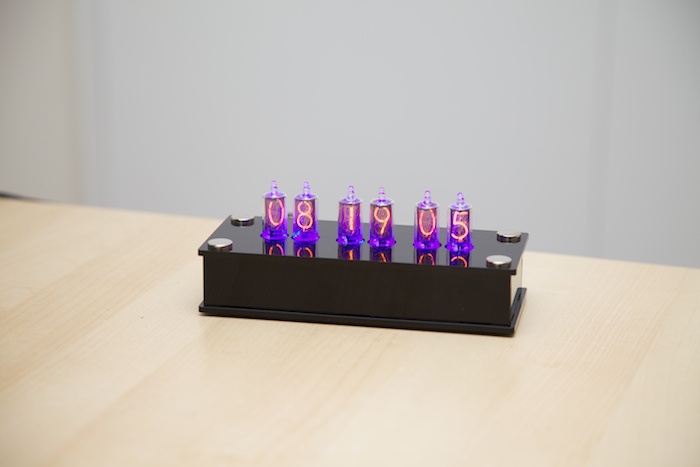
This is the Little Blue Something in the Black Brilliance case from Nocrotec and NixieKitWorld.com . This clock is sold as a kit and this particular one features Burroughs B-5853 tubes with blue LED under lighting but other tubes and under lighting options are available as well. (You can see other variations of the same design here.)
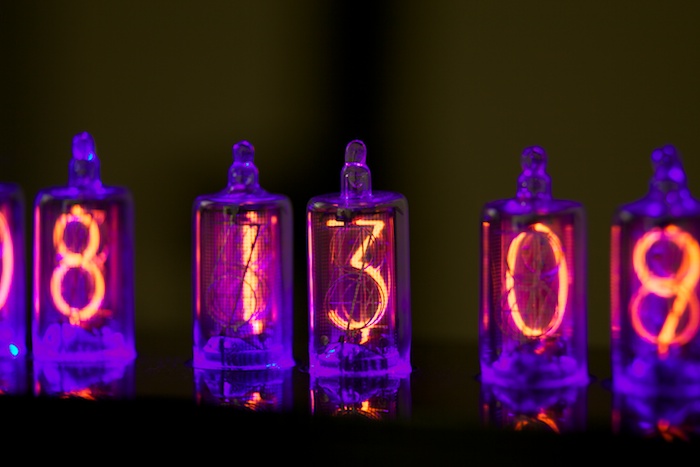
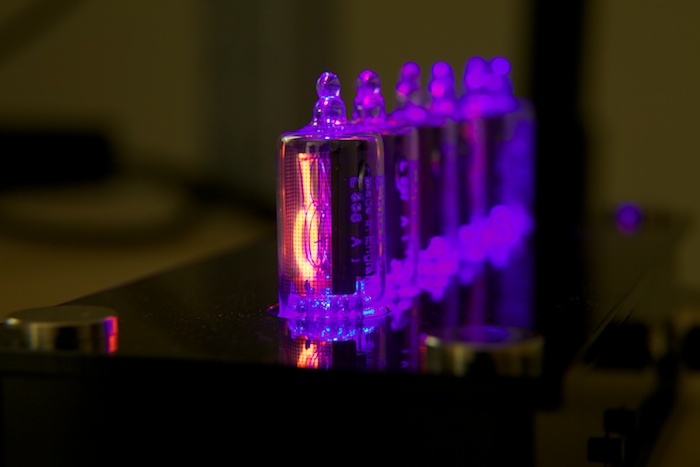
The Burroughs tubes used in this device are some of my favorite. They are not nearly as large as an IN-18 but they are very legible with crisp edges around the numbers and a proper numeral 5. The tubes feature a fine mesh which is almost invisible from a few feet away and the envelope is flat at the top except for where the gas was evacuated. I’m not sure what the point is of forming such a nice top (as opposed to a rounded version) but does add a nice visual effect to the device.
The enclosure is a shiny black acrylic with four flat metal bolts on each corner. It is assembled in the same way that other Nocrotec enclosures are with each side fitting in to grooves in the base to form the shape. With that said, there are no lose pieces and the enclosure feels sturdy. It is not a kid’s toy, but it still feels solid.
The LED under lighting is the same blue led setup that Dieter uses for many of his projects. This contrasts nicely with the orange glow of the neon digits but the color is user selectable (at the time of assembly) and the green led lighting options appears quite nice as well.
Accuracy
The LBS setup actually has a few different options for maintaining an accurate count of the time. It supports DCF inputs (for users within Europe) and GPS (via a DCF converter). Both of these options are extra and do not ship with the device. The board can also accept a 1PPS input if you want to sync it to another source. Lastly, the device measures the line frequency and automatically compensates the crystal to ensure long-term stability.
Tube Life
The board supports a few different methods for prolonging the tube life. The user can set display brightness via the switches on the back and he can set auto off times via a jumper when assembling the clock. The board also supports an LDR which allows the device to automatically dim in proportion to the ambient light in the room. This has the advantage of being automatic and significantly increases the life of the tubes
Photos:
Features:
- Floor lighting with 2 LEDs per tube, this ensures a very balanced floor lighting
- different colours available for the LED floor lighting
- extremely high-definition glow of the digits
- extremely high life expectancy of the tubes
- Digit height: 13 mm (0.51")
- matched, tested tubes (NOS = new old stock = old, unused stock tubes)
- Black Brilliance Case
- Dimensions: Width: 155 mm, depth: 65 mm, total height: 61 mm, case height: 32 mm
- crossfade mode (digits fade from one number to the next)
- dimmable tubes
- spare tubes available (see above)
- tubes can be switches off manually (Clock runs further meanwhile)
- 12/24 hours mode in DCF77 or GPS mode
- date display (can be switched off)
- date display in arrangement: DD MM YY or MM DD YY
- Night power down mode (tubes can be switched off at preset times by hardware)
- supports DCF77 receiver
- simple assembling
- no SMD parts
- PCB in "black surface" technology looks neutral in enclosures
- high grade epoxy PCB
Other options
- The board supports neon indicator bulbs that can both blink and indicate AM/PM
- The device can drive a few different tube configurations. From the manual:
- Mode 1: is six tubes 2x3 multiplexed mode normal Nixie tubes (default mode)
- Mode 2: is four tubes 2x2 multiplexed mode using normal Nixie tubes
- Mode 3: is four tubes using dual anode tubes 1x4 multiplexed mode
- Mode 4: is two tube non multiplexed mode using normal Nixie tubes
- Mode 5: for two B7971 or ZM1350 special alphanumeric tubes multiplex 1x32
Price (as of this writing)
- 6x tubes 38.56 EUR
- Clock Kit (electronics & case) 144 EUR
- DCF77 Kit 22 EUR
Comments
RSS feed for comments to this post